Farm Insurance Australia Plant & Equipment Lease Calculator
Estimate repayments with our Plant & Equipment Lease Calculator. Factor in residual (balloon) payments, compare finance options, and choose flexible terms to suit your business.
Calculator results are estimates only and not quotes. Actual quotes will be provided by licensed brokers after you submit an enquiry.
Business Asset Lease Details:
Important!
Business Asset Lease Interest Rates differ from lender to lender and will depend on your individual circumstances (credit history, employment status, age, etc.). To find out if you qualify ... and for a free, personalised interest rate and repayment quote, please CLICK HERE
Business Asset Lease Amortisation Calculator
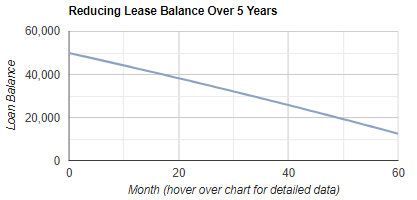
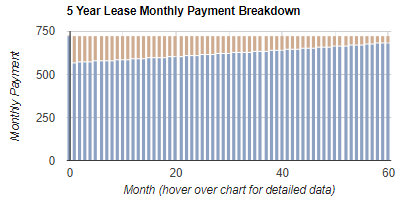
The following amortisation graphs detail month-by-month data on the progress of the proposed loan. The first chart below examines the reducing loan balance over the course of the finance contract term. The second graph illustrates the portion of each monthly repayment allocated to payment of interest vs principal reduction.
How to use our Plant & Equipment Lease Calculator
Our Plant & Equipment Lease Calculator helps business owners estimate lease repayments before you speak with a lender. It’s important because changing the residual (balloon), term and interest rate can materially affect cash flow, total interest paid and the end-of-term payout amount. The calculator provides estimates only and is general information, not personal advice; consider your objectives, financial situation and needs, and check the lease contract, fees and tax treatment with your accountant or adviser.
How to complete the calculator (best-practice order):
1. Purchase Price: Enter the total amount you want to finance, using whole numbers only (no dots or commas). Include relevant on-road and acquisition costs you intend to finance, such as applicable tax, stamp duty, registration, insurance or other costs.
2. Balloon or Residual Value: Choose the residual as a percentage of the purchase price. A higher residual usually lowers the ongoing repayments, but increases the amount due at the end and can increase the overall cost across the term. Select a residual that matches your expected end-of-term plan (refinance, trade-in, or pay out).
3. Term of Loan: Select the number of years. Longer terms typically reduce repayments but can increase total interest paid. Use a term that aligns with the asset’s useful life and how long you expect to keep it.
4. Interest Rate: Select a rate to simulate. The displayed range is indicative only; your actual rate depends on the lender and your circumstances and can only be confirmed after you apply.
5. Calculate: Run the estimate, then re-run scenarios to compare different residuals, terms and rates for a clearer view of affordability versus total cost.
How to interpret the results:
1. Repayment estimate: Treat this as a guide for budgeting, not a quote.
2. Residual due: Note the end-of-term balloon amount you’ll need to pay or refinance.
3. Amortisation graphs: Review how the balance reduces over time and how each repayment splits between interest and principal, which helps you understand cost versus payoff progress.
Farm liability insurance helps protect farming operations from the financial impact of legal claims, bodily injury allegations, property damage claims and other liabilities connected with farm activities. Its value depends on your farm's size, activities, risk profile, cover limits and the potential cost of an uninsured claim. - read more
Farming is much more than an occupation; it's a way of life and a heritage that often spans generations. In today's ever-evolving agricultural landscape, embracing modern practices while preserving your farm's future has never been more crucial. Estate planning emerges as a pivotal strategy for safeguarding your agricultural legacy, ensuring that your hard-earned investments and the land you hold dear are passed on according to your wishes. - read more
Farming in Australia involves a wide mix of assets, income streams and risks, from crops and livestock to machinery, buildings, visitors and weather events. Understanding the main types of farm insurance can help farmers review how different policies may protect an agricultural operation. - read more
Farm insurance documents can be detailed, but understanding the key terms, exclusions, disclosure duties and complaint pathways can help Australian farmers review policies, renewals and quotes more confidently. - read more
Livestock can be one of the most important assets on an Australian farm. This guide explains how livestock insurance works, what risks it may cover, how to assess your needs and what to consider when comparing policies and providers. - read more
Farm insurance costs in Australia can vary because every farm has a different mix of assets, activities, risks and cover requirements. This guide explains the main factors that may influence farm insurance quotes and practical ways to review premiums without creating unnecessary coverage gaps. - read more
Agroforestry is a transformative approach to land management that integrates trees into agricultural landscapes. In Australia, where farmers contend with variable climates and environmental challenges, agroforestry offers a resilient pathway to productivity and sustainability. - read more
Hobby farming has become increasingly popular in Australia, with many individuals and families embracing the joys of growing their own produce, raising livestock, and enjoying a rural lifestyle. Whether it's a small vegetable garden, a few chickens, or a larger mixed farming operation, hobby farms offer both relaxation and a connection to nature. - read more
Farming is inherently risky. With factors like weather, pests, and market fluctuations affecting crops, it's crucial to manage these risks effectively. - read more
Crop insurance can help Australian farmers manage the financial impact of crop losses caused by events such as adverse weather, pests, disease and other insured risks. The right policy depends on the crops grown, regional exposures, farm records, policy limits, exclusions, premiums and the claims process. - read more
Recent rural market reporting has pointed to firmer cattle values across parts of eastern Australia, with improved seasonal confidence, restocker demand and tighter supply helping support prices in a number of saleyards. For producers, stronger prices are welcome after a period of difficult seasonal and cost pressures. But there is also a quieter insurance issue sitting behind the market lift: if livestock values rise, the financial exposure carried by the farm may rise with them. - read more
Recent rural reporting around the spring outlook has put severe weather back on the agenda for Australian farm businesses. The practical concern is not whether one forecast proves exactly right. It is that storms, hail, lightning, strong wind and sudden downpours can move quickly from weather bulletin to balance-sheet problem, particularly when crops are advancing, machinery is in heavy use and sheds are holding higher-value inputs or stored produce. - read more
Recent rural reporting has pointed to renewed mouse activity across parts of the grain belt, with growers being urged to monitor paddocks, sheds and stored grain as seasonal conditions become more favourable for breeding. For many producers, the immediate concern is practical: protecting emerging crops, keeping grain storage secure and acting early before damage becomes expensive or difficult to contain. - read more
Recent rural reporting has again highlighted the strain dry seasonal conditions can place on livestock producers, particularly where pasture growth is limited, supplementary feed is expensive and water security is becoming a daily management issue. For many Australian farm businesses, the immediate concern is practical: keeping stock in condition, deciding whether to buy feed, move animals, agist, or sell earlier than planned. - read more
Recent rural reporting has again pointed to frost as a live concern for grain and mixed farming regions after a season that, in many districts, began with improved moisture and renewed confidence. For growers, the message is familiar but important: a good start does not guarantee a clean finish. Frost can arrive quickly, affect paddocks unevenly and turn strong yield expectations into a much more complicated financial picture. - read more
Recent rural reporting on Queensland fruit fly pressure in horticultural regions is a timely reminder that biosecurity is not only a production issue. For orchardists, vegetable growers and mixed farms with small horticulture enterprises, a pest detection can affect far more than the crop in the paddock. It can influence picking schedules, packing arrangements, transport routes, labour planning, market access and cash flow. - read more
Recent rural reporting has pointed to a more encouraging winter moisture profile across parts of the eastern and southern farming regions, with many growers seeing improved crop prospects after a difficult start in some districts. For farm businesses, that is welcome news. Better soil moisture can support establishment, pasture growth and yield potential, but it does not remove the need for disciplined risk planning. - read more
Grain Central reported on 23 July 2026 that Australian grain prices have continued to firm, supported by global wheat market heat and local uncertainty about new-crop production. For growers, the story is not simply about better prices. It is also a reminder that a promising crop can still carry significant risk when weather, timing and market volatility start moving together. - read more
A second H5 bird flu detection in New South Wales has moved avian disease risk from a distant global concern to a practical on-farm planning issue for Australian producers. The latest case involved a petrel found at Hawks Nest on the NSW Mid North Coast, following an earlier detection at the same beach. Authorities have indicated the human health risk remains low, and there has been no reported H5 detection in NSW commercial poultry flocks at this stage. - read more
On 3 July 2026, Grain Central reported that RAGT Australia’s SowSure crop establishment protection initiative had received $982,049 through the Australian Government’s Future Drought Fund. For grain growers, the news is notable because it places insurance-style thinking closer to the sowing decision, rather than waiting until later-season losses become obvious. - read more
Start your free farm insurance quote comparison here.
Knowledgebase
Insurance Deductible: the amount that an insured is required to contribute toward an insurance claim as stipulated in an insurance policy. Otherwise known as the "policy excess".